
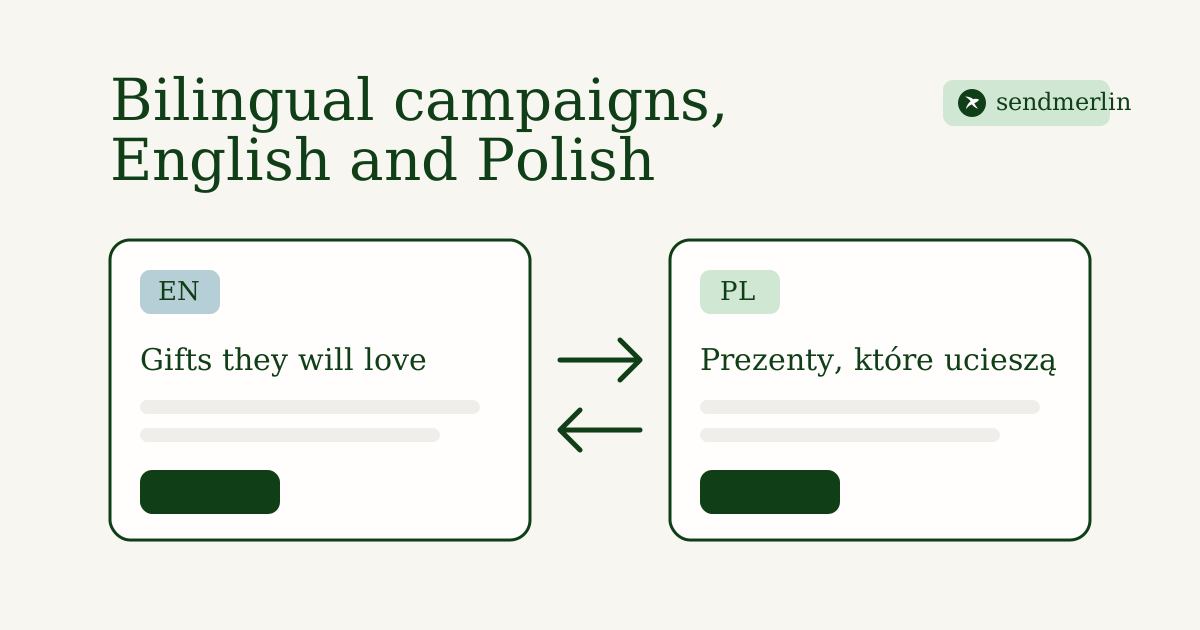
If you sell in Poland and beyond, your inbox audience is split: customers who expect "Dzień dobry" and customers who expect "Hi". Sending everyone the same English email is leaving money on the table; Polish customers open, click, and buy measurably more when you write to them in Polish.
One list, two languages (not two lists)
The tempting shortcut is two separate lists. Don't. Duplicate lists drift apart, people end up on both, and every signup form needs a language picker. The cleaner structure is one list with a language attribute on each subscriber, set from where they signed up (your .pl page or your international one) or from an explicit preference. Each campaign then goes out in two versions, each to its own segment.
Localize, don't translate
Word-for-word translation is how you get emails that are technically Polish and obviously foreign. Localization means rewriting for the reader:
- Form of address: Polish marketing overwhelmingly uses the informal "Ty", but it is a brand decision; pick one and be consistent. English has no such choice to make.
- Prices and formats: 129,99 zł, not $129.99. Dates as 6 grudnia, not December 6th.
- Idioms and urgency: "Last chance!" has natural Polish equivalents; a literal translation reads like a warning label.
- Subject length: Polish words run long, and diacritics render fine everywhere in 2026. Keep PL subjects under about 45 characters so mobile clients don't cut them.
The Polish retail calendar is your content plan
International brands plan around Black Friday and Christmas. Polish inboxes have more rhythm than that, and campaigns tied to local moments feel native:
| Date | Moment | Works for |
|---|---|---|
| March 8 | Dzień Kobiet | Gifts, beauty, flowers, self-care |
| May 26 | Dzień Matki | Gift guides, personalized products |
| June 1 | Dzień Dziecka | Toys, family experiences |
| Late August | Powrót do szkoły | Kids, stationery, routines |
| Late November | Black Week | Everyone; Poland adopted the full week |
| December 6 | Mikołajki | Small gifts, an extra December sales peak Western calendars miss |
Mikołajki deserves emphasis: it is a gifting moment two and a half weeks before Christmas that purely international tools never remind you about.
A workflow that doesn't double your work
The reason most shops stay monolingual is effort: two versions of every campaign feels like double work. The workflow that fixes it:
- Write the campaign once, in whichever language you think in.
- Duplicate it for the second language, localizing subject, content, and offer framing.
- Send each version to its language segment at the same local time.
- Compare results per language; over time you will learn that the segments behave differently.
This is precisely what SendMerlin automates: one click duplicates a campaign into English or Polish with the subject and body localized rather than machine-translated, and the campaign calendar suggests both international and Polish retail moments. You review the copy, not retype it.
Frequently asked questions
Should I put both languages in one email?
Only as a fallback when you don't know a subscriber's language. Bilingual emails double the length, halve the clarity, and read as "not really for me" in both languages.
How do I know a subscriber's language?
Capture it at signup: the language of the page the form sits on is a reliable default. Let subscribers change it via a preference link in your footer.
Do Polish diacritics break email subjects?
No. UTF-8 subjects with ą, ę, ł and friends render correctly in every mainstream client. Write natural Polish; skipping diacritics looks worse than any imaginary rendering risk.